
If a piece of equipment, cable, or asset in your facility can’t be identified at a glance, it’s a safety risk, a compliance gap, and a maintenance headache waiting to happen. Industrial identification solutions solve that problem — but “identification” covers a wider range of products and processes than most buyers realise, from metal nameplates through to chemically etched control panels.
This guide breaks down what industrial identification solutions actually are, the methods used to produce them, how to match a method to your application, and where Australian standards and harsh-environment durability fit into the decision.
Industrial identification solutions are the products and manufacturing processes used to permanently or semi-permanently mark equipment, machinery, cables, and assets with information — serial numbers, compliance data, hazard warnings, asset tags, or branding. Unlike consumer labels, industrial identification is built to survive conditions that would destroy an ordinary sticker: UV exposure, chemical contact, abrasion, vibration, and extreme temperature swings.
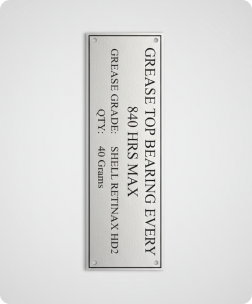
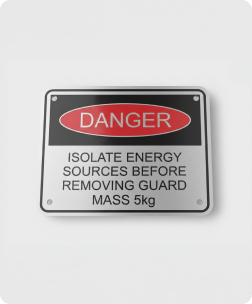
The category spans several distinct product types, including stainless steel and aluminium nameplates, asset tags, compliance plates, safety signage, engraved labels, and printed industrial signage — each suited to a different combination of environment, budget, and required lifespan.
Three pressures drive demand for reliable identification systems:
Laser engraving cuts markings directly into the surface of metal, so the information can’t peel, fade, or wear off — making it a common choice for serial tags, compliance plates, and equipment nameplates that need to last the life of the asset. It performs well in outdoor, high-abrasion, or chemically exposed environments. See our laser engraving service for material options and turnaround.
Chemical etching produces a precise, permanent mark by selectively removing material from a metal surface — well suited to detailed graphics, fine text, and control panel labelling where a flat, smooth finish matters. It’s a common choice where laser engraving’s heat-affected finish isn’t ideal. More detail is on our chemical etching page.
For full-colour branding, instructional graphics, or signage that doesn’t need the permanence of engraving, UV and digital printing offer faster turnaround and lower cost per unit while still holding up to typical industrial handling. Check our UV printing and digital vinyl printing services for colour and substrate options.
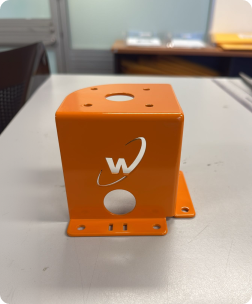
Identification is only useful if it stays attached. Custom stainless steel mounts, brackets, and plates are often the overlooked half of an identification project — particularly for equipment in vibration-heavy or corrosive environments where standard fixings fail. Our stainless steel fabrication service covers custom mounting hardware built to match the nameplate or tag it’s holding.
The right method depends heavily on where the identification will live:
Sites with recurring identification needs — new equipment rollouts, replacement tags, or standardised signage across multiple locations — often find that one-off ordering becomes a bottleneck. Managed stock arrangements keep commonly used nameplates, tags, and labels in supply without re-quoting every order from scratch. Our stock management service is built around exactly this kind of recurring industrial supply need.
An asset tag is typically used to track and identify an item for inventory or maintenance purposes (often with a serial number or barcode), while a nameplate usually displays fixed manufacturing or compliance information such as model number, ratings, or certification details. The two often appear on the same piece of equipment.
A laser-engraved or chemically etched stainless steel or anodised aluminium nameplate is generally expected to last the operating life of the equipment it’s attached to, even in outdoor or chemically exposed conditions — unlike printed labels, which typically need replacement over a shorter cycle.
Many do, particularly in regulated sectors such as lifting and rigging, vertical transportation, and defence, where compliance plates must display specific certified information. It’s worth confirming the applicable standard for your equipment type before ordering.
Yes — many sites need a combination of engraving, etching, printing, and custom mounting hardware across different equipment types, so working with a single manufacturer that offers all of these can simplify sourcing and keep specifications consistent.