Supply chain and labelling technology providers see 2026 as a turning point for Australian asset tracking. Three forces are driving this shift: AI-enabled operations, digital workflows, and real-time asset visibility.
RFID adoption is expected to grow across healthcare, government, logistics, and rail. Organizations want faster audits and more reliable tracking of critical assets. Global identification standards are also shaping how companies label and track goods.
This isn’t limited to warehouses and logistics fleets. Fabricated and structural metal manufacturing is under pressure from fluctuating construction demand and rising compliance expectations. Checkmate Industries and its customers operate in this sector. These pressures increase the need to prove an asset’s identity, history, and inspection status.
It’s tempting to read “traceability trend” as a software and RFID story. In practice, every digital tracking system is only as reliable as the physical identifier attached to the asset. A barcode, RFID chip, or QR code is worthless if the label carrying it has faded, delaminated, or fallen off after twelve months in a plant room, on a crane, or outdoors on site.
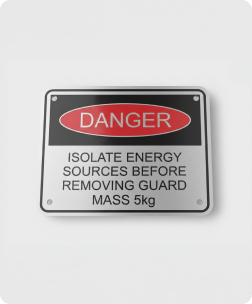
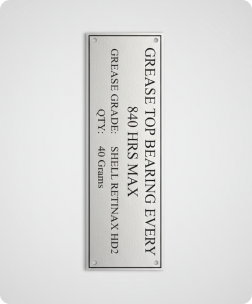
That’s the gap that durable metal tags, engraved nameplates, and industrial-grade labels are built to close. As more Australian businesses formalize asset registers and compliance documentation around traceability, the label itself becomes part of the audit trail — which means specification decisions that used to be an afterthought (metal type, engraving vs. printing, adhesive vs. mechanical fixing, UV and chemical resistance) now carry real operational weight.
Usually not “instead of” — RFID and durable metal tags typically work together. The RFID chip or barcode carries the digital data; the metal tag or label carries the human-readable identification and often houses the chip itself, protecting it in harsh environments.
It should outlast the asset it’s attached to. For most industrial equipment, that means lasting 10+ years without the text or code becoming illegible. That’s why engraved stainless steel and anodized aluminum remain standard choices. They outperform printed adhesive labels in demanding environments.
Yes. Traceability expectations are flowing down supply chains. Larger customers and regulators increasingly require smaller manufacturers to prove asset history. That process starts with a physical tag that lasts as long as the paperwork.