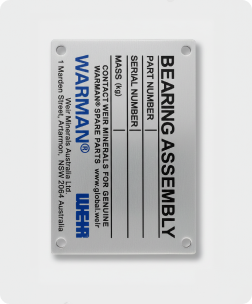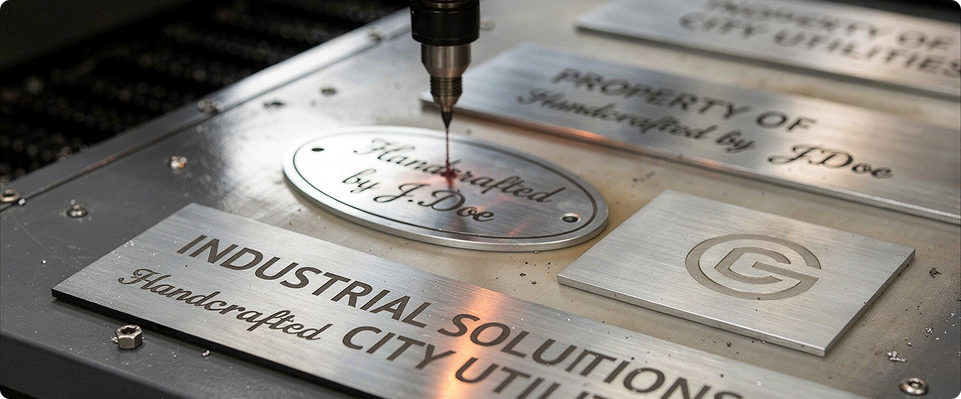
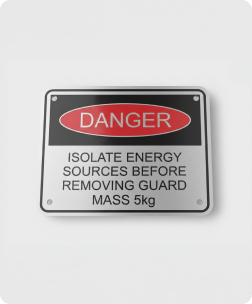
When selecting a metal nameplate for industrial equipment, two of the most common manufacturing methods are etching and engraving. Both options offer durability and precision, but they serve slightly different purposes depending on the application.
Etched metal nameplates are produced through a chemical process that removes material from the metal surface to create recessed text or graphics. This method allows for extremely detailed designs, making it ideal for complex layouts, logos, and fine lettering. Because the design is etched into the metal rather than printed on top, the information remains legible even after years of wear.
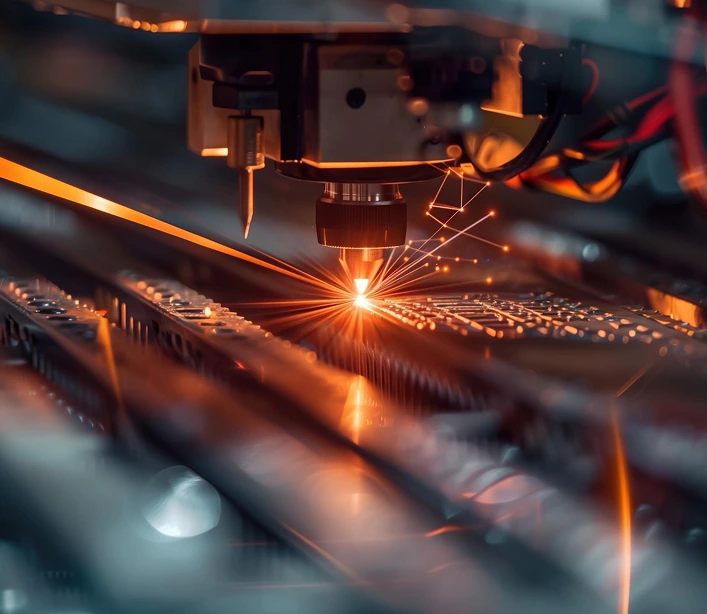
Engraved nameplates, on the other hand, are created using mechanical or laser engraving tools that carve the design directly into the material. This process produces deep, highly visible markings that are extremely resistant to fading or abrasion. Engraving is often preferred for applications where the plate may be exposed to heavy wear or harsh environmental conditions.
Another key difference is the visual finish. Etched plates typically have a cleaner and more refined appearance, which works well for professional equipment branding. Engraved plates provide a more pronounced depth, making them easy to read even in challenging industrial environments.
Cost and production time can also vary. Etching is often more cost-effective for larger production runs, while engraving may be preferred for smaller quantities or highly specialised components.
Choosing the right option depends on factors such as environment, readability requirements, design complexity, and budget. Industrial sectors including manufacturing, mining, and construction frequently use both methods depending on the specific equipment.
Manufacturers like Checkmate Industries Pty Ltd offer both etched and engraved metal nameplates, helping businesses select the most suitable solution for their equipment identification needs.
Ultimately, the right nameplate ensures that critical information remains visible, durable, and compliant with industry standards.