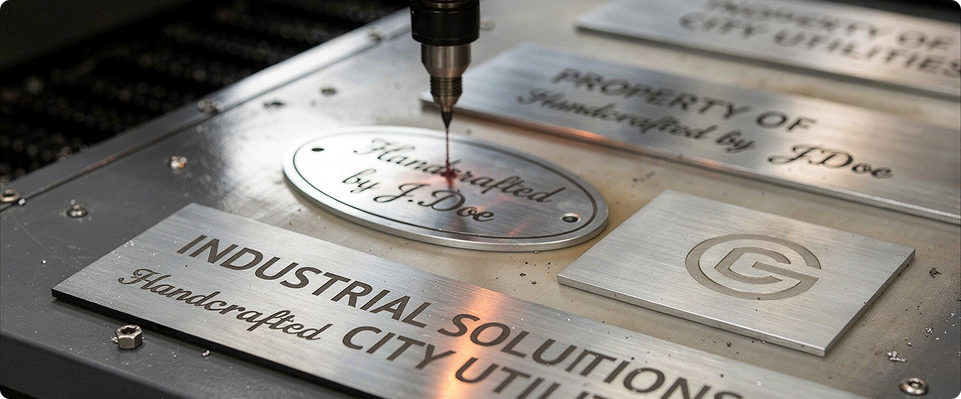
Equipment nameplates are permanent tags
August 10, 2026

Equipment Nameplates Are Permanent Tags

Equipment nameplates are permanent tags fixed to machinery, tools, and electrical devices to display serial numbers, ratings, logos, and other critical operational data. Built from materials like anodised aluminium and stainless steel, they’re engineered to resist heat, chemicals, abrasion, and years of outdoor exposure  making them a permanent record that survives long after a paper label or sticker would fail.

  • What they are: Permanent metal or plastic tags fixed to machinery to show serial numbers, model data, safety ratings, and branding.
  • Why they matter: They support asset tracking, maintenance records, regulatory compliance, and operator safety.
  • Materials: Anodised aluminium, stainless steel, and Metalphoto are the most common chosen for resistance to heat, chemicals, UV, and abrasion.
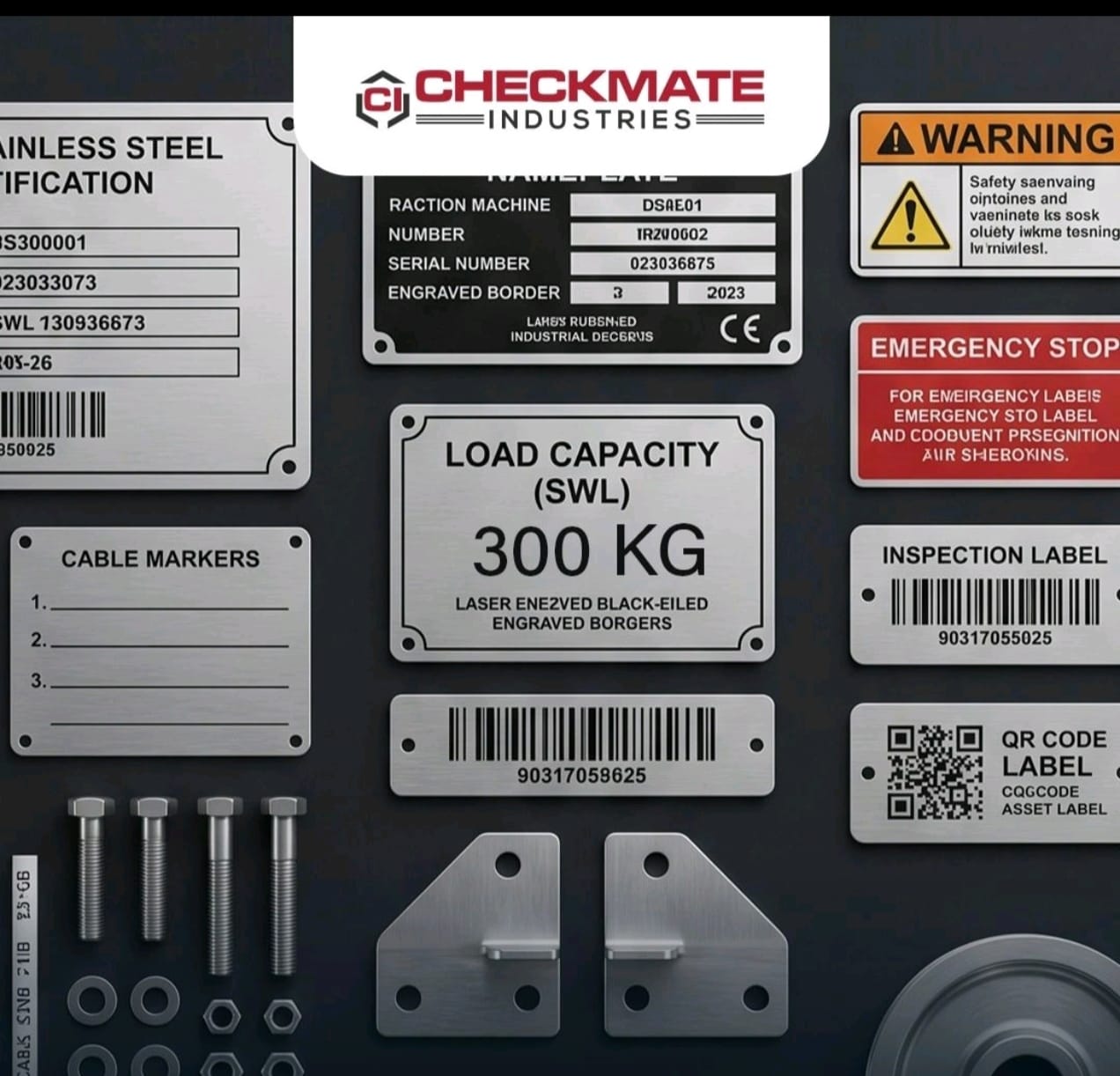
  • What goes on them: Serial numbers, model numbers, voltage/load ratings, compliance markings, QR/barcodes, and company branding.
  • Where they’re used: Manufacturing plants, mining and lifting equipment, electrical switchboards, construction machinery, and fabricated metal assets.
  • How to choose: Match the material and fixing method to the operating environment, then confirm the plate meets any relevant compliance standard for your industry.

What Are Equipment Nameplates?

An equipment nameplate is a fixed, durable identification tag attached directly to a piece of machinery, tooling, or electrical equipment. Unlike a printed label or sticker, a nameplate is designed to stay eligible for the operational life of the asset it’s attached to, often 15 to 25 years or more, even in harsh industrial or outdoor conditions.

At its core, an equipment nameplate exists to answer three questions at a glance: what is this asset, who made or owns it, and what are its safe operating parameters? That makes it a small but essential piece of industrial infrastructure, sitting at the intersection of asset management, safety compliance, and brand identity.

Why Equipment Nameplates Matter

Equipment nameplates aren’t decorative; they do real operational work across three areas of a business.

1. Asset Tracking and Maintenance

Serial numbers and model data on a nameplate let maintenance teams quickly match a machine to its service history, warranty status, and spare parts catalogue. This is especially

important for businesses managing large fleets of tools or equipment across multiple sites, where visual identification alone isn’t reliable.

2. Safety and Regulatory Compliance

Many industries require permanent identification of load ratings, voltage, pressure limits, or inspection dates directly on the equipment. For lifting gear, electrical switchboards, and pressure vessels in particular, a compliant nameplate isn’t optional; it’s a documented safety requirement that protects both the operator and the business.

3. Brand Identity and Resale Value

For manufacturers and fabricators, a nameplate is also the last piece of branding an OEM controls once equipment leaves the factory. A well-made, legible nameplate signals build quality and keeps the manufacturer’s name attached to the asset for its entire working life, which matters for warranty claims, repeat business, and resale value.

Materials Used in Equipment Nameplates

The material determines how well a nameplate survives its environment. The three most common choices are:

  • Anodised aluminium: Lightweight, corrosion-resistant, and cost-effective. The anodising process seals graphics and text into the metal itself, so they won’t scratch, fade, or wash off  a good fit for most general industrial and outdoor applications.
  • Stainless steel: The go-to choice for the harshest environments  marine, mining, and heavy industrial sites thanks to its strength and resistance to corrosion and extreme temperatures.
  • Metalphoto (photosensitive anodised aluminium): Used where the highest durability standard is required, including defence and aerospace specifications, because the image is embedded within the anodic layer rather than printed on top of it.

Plastic and polycarbonate nameplates also have a place for lighter-duty or indoor applications, but for equipment exposed to weather, chemicals, or constant handling, metal remains the standard.

What Information Belongs on an Equipment Nameplate

While layout varies by industry, most equipment nameplates include a combination of:

  • Manufacturer name and logo
  • Model and serial number
  • Date of manufacture
  • Voltage, load, pressure, or capacity ratings
  • Compliance markings (e.g. relevant Australian Standards or certification marks)
  • QR codes or barcodes for digital asset tracking
  • “Property of” details for owned or leased equipment

Common Applications for Equipment Nameplates

Equipment nameplates show up wherever machinery needs to be tracked, maintained, or certified. Typical applications include:

  • Manufacturing and processing machinery on production floors
  • Lifting and rigging equipment chains, slings, hoists, and shackles
  • Electrical switchboards, control panels, and rating plates
  • Construction and mining equipment operating outdoors year-round
  • Fabricated metal assets and custom OEM equipment

How to Choose the Right Equipment Nameplate

Getting the specification right up front avoids reprinting costs and compliance headaches later. Work through these factors:

  • Environment: Match the material to the conditions  stainless steel or Metalphoto for extreme outdoor, chemical, or marine exposure; anodised aluminium for general industrial use.
  • Fixing method: Rivets and screws suit high-vibration machinery; adhesive backing works for smooth, low-vibration surfaces where drilling isn’t practical.
  • Compliance requirements: Confirm whether your industry mandates specific data, wording, or a certification mark on the plate.
  • Legibility distance: Text and logo size should be readable from the typical distance an operator or inspector will be standing.
  • Production method: Screen printing suits shorter runs and simpler designs; engraving and etching offer the highest long-term durability for detailed or safety-critical information.

FAQs

How long do equipment nameplates last?

A well-specified metal nameplate particularly anodised aluminium, stainless steel, or metalphoto is designed to remain legible for the full working life of the equipment it’s attached to, commonly 15 to 25 years, even with continuous outdoor exposure, chemical contact, or extreme temperatures.

What’s the difference between a nameplate and a compliance plate?

A nameplate typically identifies the asset itself, manufacturer, model, and serial number. A compliance plate specifically certifies that the equipment meets a defined regulatory or safety standard, often with inspection dates and certification details. In practice, many equipment plates combine both functions on a single tag.

Can equipment nameplates be customised with a company logo?

Yes. Most manufacturers offer full customisation, including logos, colours, QR codes, and layout, so the nameplate reinforces brand identity as well as providing tracking and compliance information.

What’s the best material for outdoor or harsh industrial environments?

Stainless steel and anodised aluminium are the most common choices for demanding conditions, offering strong resistance to UV, moisture, chemicals, and abrasion. For the highest durability standard, Metalphoto is often specified in defence, mining, and marine applications.