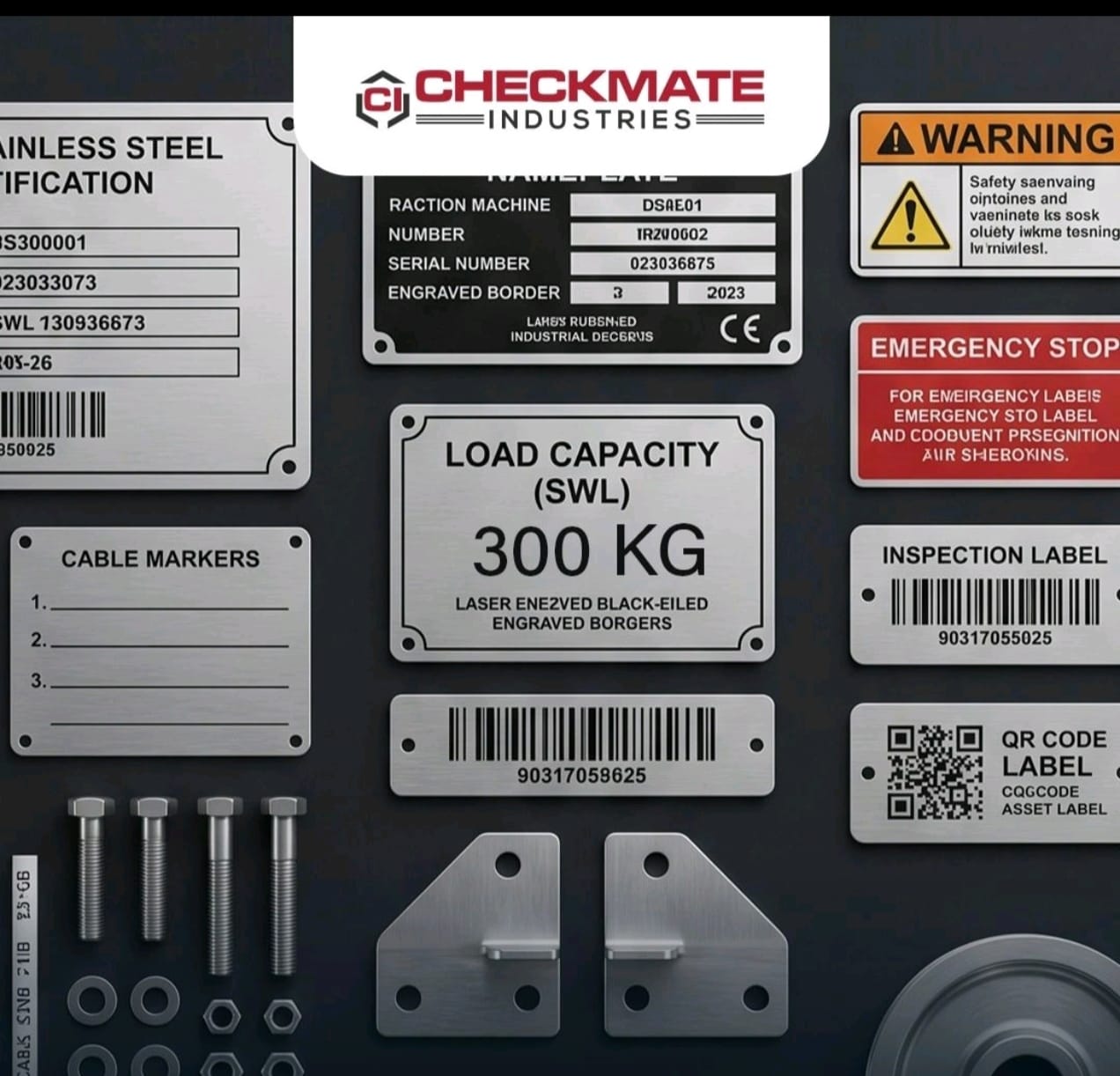
On a defence contract or a major infrastructure build, a label isn’t decoration, it’s a compliance artefact. It’s the thing an auditor, a prime contractor, or a maintenance crew twenty years from now relies on to know what an asset is, where it came from, and whether it’s still fit for service. Get it wrong and the consequences aren’t cosmetic either: failed audits, rejected deliverables, or an asset that can’t be traced when it matters most.
In commercial manufacturing, a nameplate mostly needs to look right and survive the environment. In defence and infrastructure work, it needs to do that and satisfy a documented chain of requirements — material specification, dimensional tolerance, marking content, traceability method, and often a specific standard cited by contract number. The label becomes part of the deliverable, not an accessory to it.
That distinction is why compliance labelling sits at the intersection of two disciplines: manufacturing quality (can you consistently produce a conforming part) and information integrity (does the mark actually identify the asset correctly across its service life, which on defence and civil infrastructure projects can run decades).
Materials and Durability: Where Compliance Meets the Real World
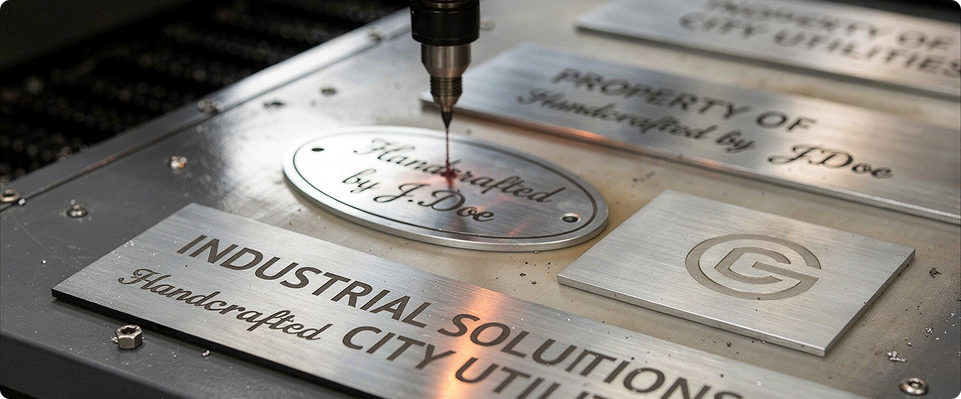
A label that’s technically correct on day one but illegible in five years isn’t compliant — it’s a future audit failure waiting to happen. This is where the marking method and substrate matter as much as the content:
This is the same durability logic we walked through in our guide on where metal name plates live, how they look, and how long they last – but on defence and infrastructure work, “long enough” isn’t a design preference, it’s usually a contractual minimum.
If you’re specifying or procuring labelling for a defence or infrastructure project, the practical checklist is short:
This is the work we do day to day precision-manufactured compliance plates, asset tags, and identification labelling for industrial, infrastructure, and defence-adjacent clients across Australia, built to the durability and traceability standards these projects actually require. If you’re specifying labelling for an upcoming project and need a supplier who can work against a defence or infrastructure spec rather than a generic catalogue item, get in touch and we’ll talk through what your contract requires.
UID (Unique Identification) marking under MIL-STD-130N uses a 2D data matrix code tied to a specific, globally unique serial number recorded in a defence database, and it’s built for long-term durability under harsh field conditions. A standard barcode asset tag is usually simpler — linked to an internal asset register rather than a defence-wide system — and the durability requirements depend on the environment rather than a mandated standard.
For most outdoor Australian conditions, anodised aluminium and marine-grade stainless steel are the standard choices, with engraved or laser-marked content rather than printed ink or adhesive stickers. The right choice still depends on the specific environment — coastal salt exposure, UV intensity, and chemical exposure all affect which substrate and marking method will hold up over the asset’s expected service life.
Who is responsible if a compliance label fails an audit years after installation?
This generally comes down to the contract terms agreed at the time of supply, and it can sit with the manufacturer, the installer, or the asset owner depending on whether the failure is a materials/workmanship issue or a maintenance and handling issue. It’s worth confirming warranty and liability terms for labelling specifically before a project starts, rather than assuming it’s covered under general product warranty.