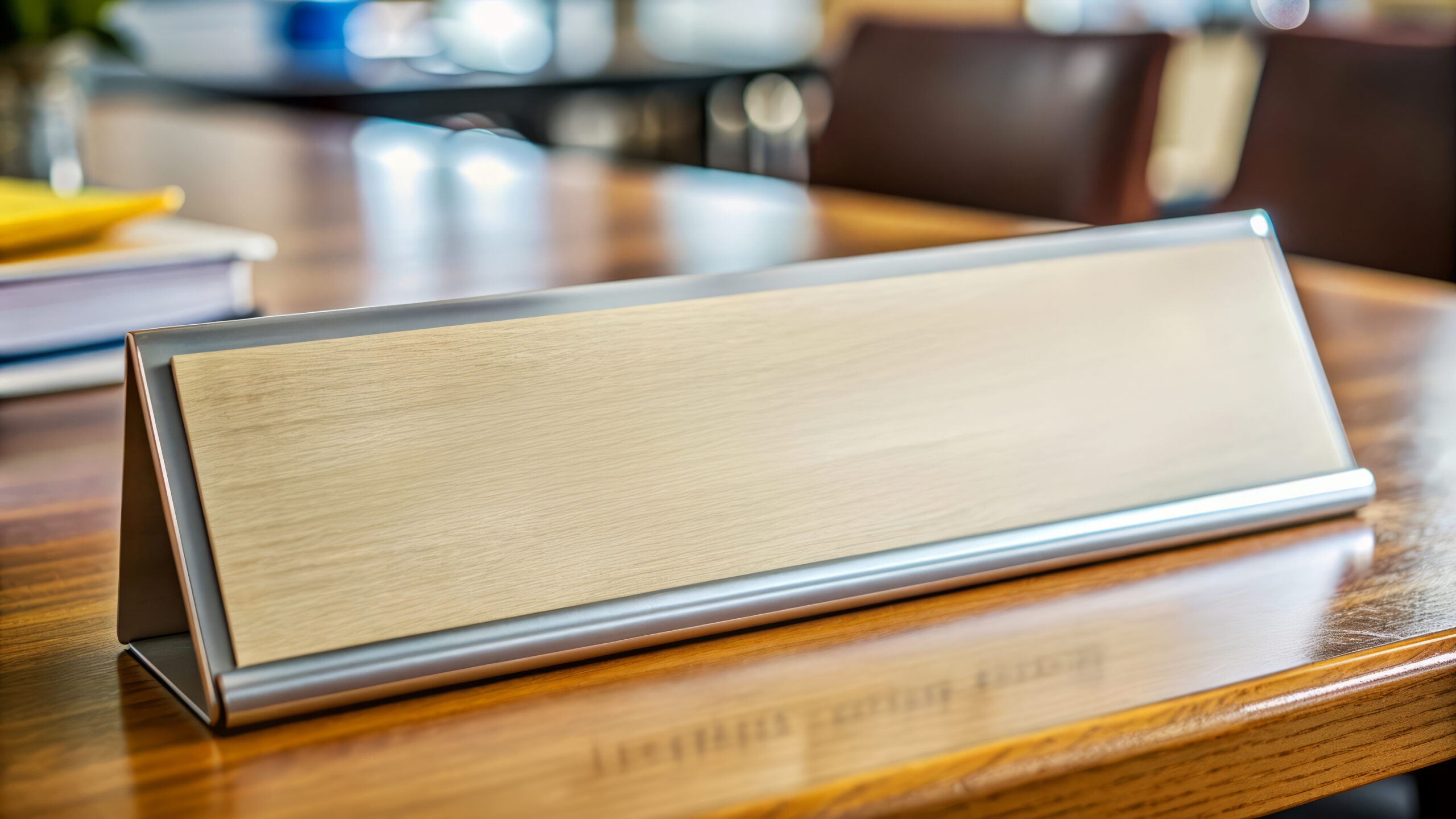
Industrial rating tags identify machinery and meet compliance standards for decades in harsh conditions. Desk and door signage does something more personal — it tells people who you are and reinforces a brand’s identity the moment someone walks in. Material, finish, and mounting method all come down to where the plate will live and the impression it needs to make.
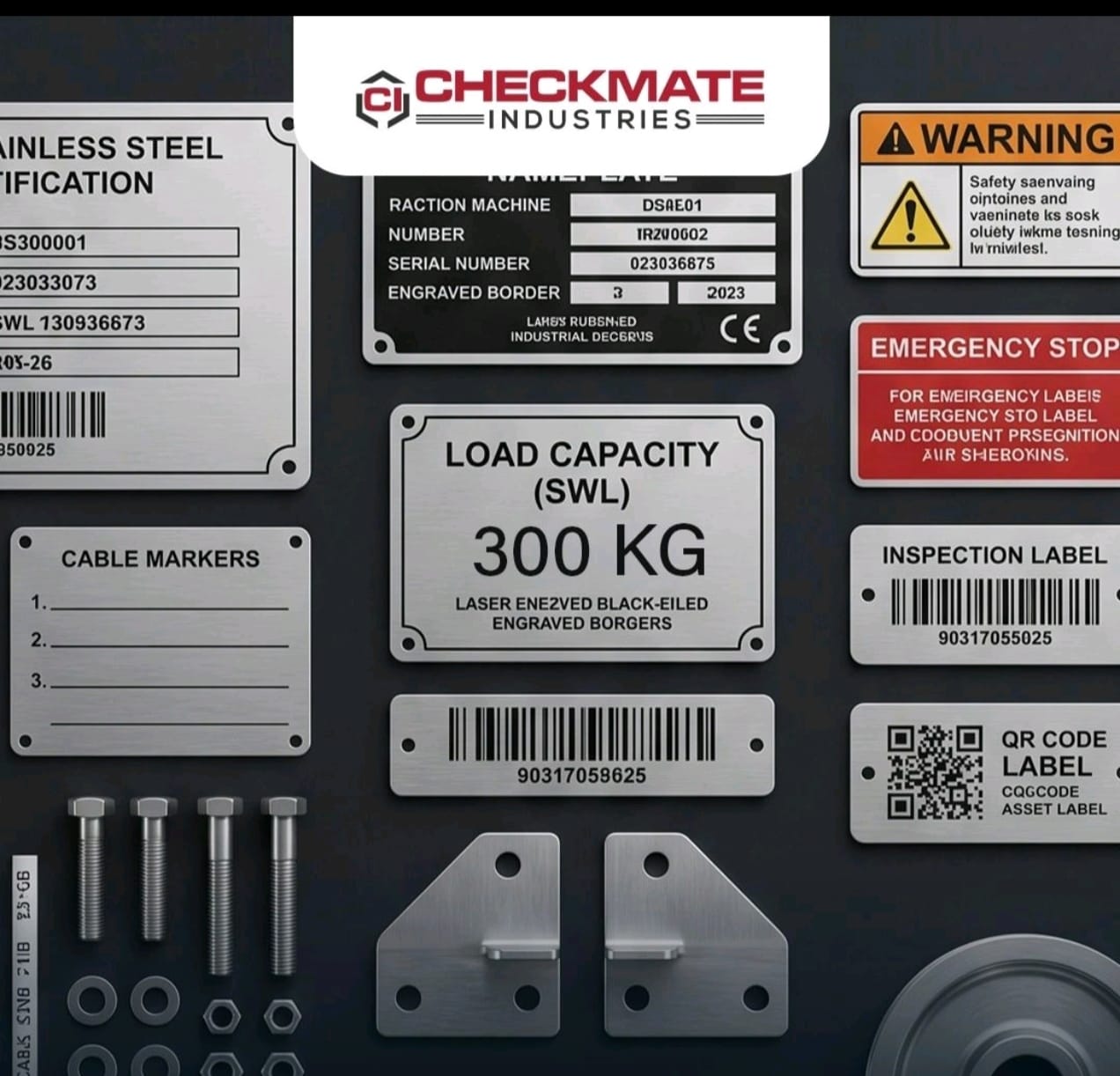
Industrial rating tags are the workhorses of the metal name plate world — fixed to machinery, switchboards, fire doors, pressure vessels, and vehicles to identify specifications, serial numbers, and compliance information at a glance. Made from aluminium or stainless steel and produced by etching, engraving, or embossing, they’re built to stay legible through years of heat, moisture, and handling. In regulated industries, a rating tag isn’t just signage — it’s often a legal requirement for the equipment’s full working life.
At the other end of the spectrum, a name plate is a small, permanent statement of identity — “this is my name, this is my role, this is where I belong.” For businesses, that idea scales into branding: a door sign or reception plaque is often a client’s first physical touchpoint with the company, and its material and craftsmanship quietly signal quality before anyone reads a word.
Metal carries a weight and permanence that plastic or paper can’t replicate. A name plate with clean engraving and a premium finish reads as established and credible — which is why offices, clinics, and reception areas consistently choose metal over cheaper alternatives.
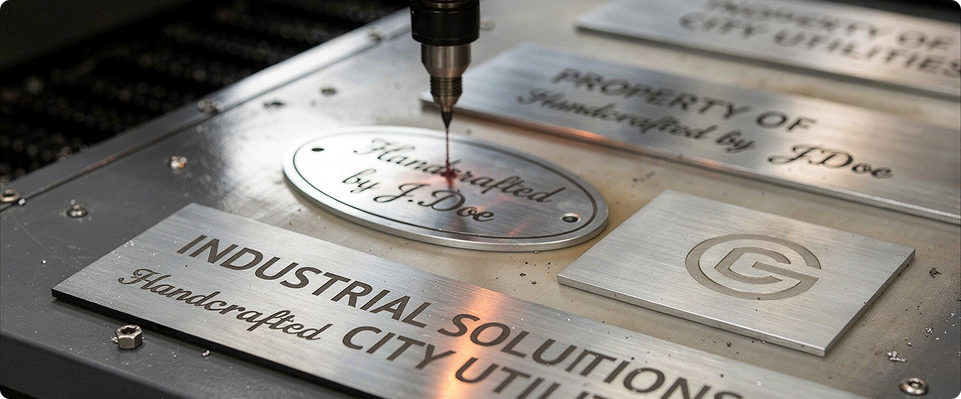
Brushed and polished finishes suit premium indoor signage, while anodised or powder-coated finishes add protection outdoors. Engraving depth, font, and colour fill (black, gold, silver) affect both legibility and style. Indoor plates mainly need to stay legible under normal wear; outdoor plates must withstand UV, rain, and — near the coast — salt air, so material and mounting hardware should be chosen with long-term weathering in mind, not just day-one appearance.
What’s the difference between an industrial nameplate and a desk name plate?
Industrial nameplates are built primarily for compliance and durability in harsh environments. Desk name plates prioritise appearance and branding for office or reception settings.
Which material lasts longer, aluminium or stainless steel?
Both resist corrosion, but stainless steel generally offers greater durability and a more premium finish, while aluminium is lighter and more budget-friendly for large-scale or outdoor use.
Can metal name plates be used outdoors in Australia’s climate?
Yes — anodised aluminium or marine-grade stainless steel with UV-stable coatings hold up well against sun, rain, and temperature changes.
Do metal name plates need to meet compliance standards?
Many industrial and equipment-rating plates must meet specific Australian standards depending on the industry, so it’s worth checking requirements before ordering for regulated equipment.
Why do businesses use metal name plates for branding instead of printed signs?
Metal conveys permanence and quality that printed signs can’t, making it a common choice for reinforcing brand identity at reception desks, office doors, and individual workstations.