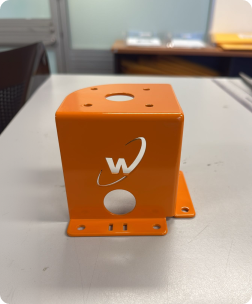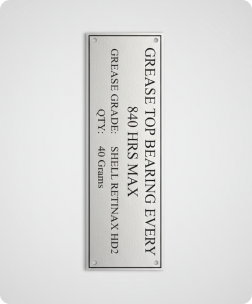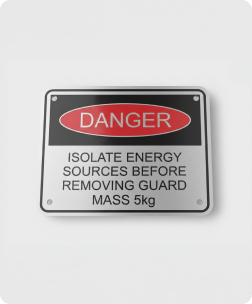

Equipment nameplates are permanent tags fixed to machinery, tools, and electrical devices to display serial numbers, ratings, logos, and other critical operational data. Built from materials like anodised aluminium and stainless steel, they’re engineered to resist heat, chemicals, abrasion, and years of outdoor exposure making them a permanent record that survives long after a paper label or sticker would fail.
An equipment nameplate is a fixed, durable identification tag attached directly to a piece of machinery, tooling, or electrical equipment. Unlike a printed label or sticker, a nameplate is designed to stay eligible for the operational life of the asset it’s attached to, often 15 to 25 years or more, even in harsh industrial or outdoor conditions.
At its core, an equipment nameplate exists to answer three questions at a glance: what is this asset, who made or owns it, and what are its safe operating parameters? That makes it a small but essential piece of industrial infrastructure, sitting at the intersection of asset management, safety compliance, and brand identity.
Equipment nameplates aren’t decorative; they do real operational work across three areas of a business.
Serial numbers and model data on a nameplate let maintenance teams quickly match a machine to its service history, warranty status, and spare parts catalogue. This is especially
important for businesses managing large fleets of tools or equipment across multiple sites, where visual identification alone isn’t reliable.
Many industries require permanent identification of load ratings, voltage, pressure limits, or inspection dates directly on the equipment. For lifting gear, electrical switchboards, and pressure vessels in particular, a compliant nameplate isn’t optional; it’s a documented safety requirement that protects both the operator and the business.
For manufacturers and fabricators, a nameplate is also the last piece of branding an OEM controls once equipment leaves the factory. A well-made, legible nameplate signals build quality and keeps the manufacturer’s name attached to the asset for its entire working life, which matters for warranty claims, repeat business, and resale value.
The material determines how well a nameplate survives its environment. The three most common choices are:
Plastic and polycarbonate nameplates also have a place for lighter-duty or indoor applications, but for equipment exposed to weather, chemicals, or constant handling, metal remains the standard.
While layout varies by industry, most equipment nameplates include a combination of:
Equipment nameplates show up wherever machinery needs to be tracked, maintained, or certified. Typical applications include:
Getting the specification right up front avoids reprinting costs and compliance headaches later. Work through these factors:
A well-specified metal nameplate particularly anodised aluminium, stainless steel, or metalphoto is designed to remain legible for the full working life of the equipment it’s attached to, commonly 15 to 25 years, even with continuous outdoor exposure, chemical contact, or extreme temperatures.
A nameplate typically identifies the asset itself, manufacturer, model, and serial number. A compliance plate specifically certifies that the equipment meets a defined regulatory or safety standard, often with inspection dates and certification details. In practice, many equipment plates combine both functions on a single tag.
Yes. Most manufacturers offer full customisation, including logos, colours, QR codes, and layout, so the nameplate reinforces brand identity as well as providing tracking and compliance information.
Stainless steel and anodised aluminium are the most common choices for demanding conditions, offering strong resistance to UV, moisture, chemicals, and abrasion. For the highest durability standard, Metalphoto is often specified in defence, mining, and marine applications.