industrial metal tags fill with permanent, tamper-resistant identification made from stainless steel or aluminum
August 5, 2026

Industrial Metal Tags: The Complete Guide to Durable Asset & Equipment Identification

When equipment lives outdoors, sits next to industrial ovens, or gets hosed down every shift, a printed sticker won’t survive the week. That’s the gap industrial metal tags fill with permanent, tamper-resistant identification made from stainless steel or aluminum, engineered to hold up under heat, chemicals, UV exposure, and constant handling. Manufacturers, facility managers, and asset-heavy operations rely on them to keep machinery labelled, equipment traceable, and compliance records legible for years, not weeks. Three formats dominate the market: laser-marked 316 stainless steel tags for corrosive or marine settings, custom engraved plates for permanent asset ID, and embossable aluminum tags for lightweight, high-volume tagging jobs. 


  • Industrial metal tags are built for environments where paper labels and stickers fail — heat, moisture, chemicals, abrasion, UV.
  • Common materials: 316 stainless steel (corrosion resistance), aluminum (lightweight, cost-effective), brass (heritage/decorative use).
  • Marking methods  laser engraving, embossing, chemical etching  each suit different budgets and durability needs.
  • Used for asset tracking, equipment ID, compliance/serial plates, and safety signage.
  • Choosing the right tag depends on the environment, expected lifespan, and how the tag will be attached.

Why Industrial Environments Need Metal Tags, Not Stickers

Vinyl labels and paper tags degrade fast once they’re exposed to sunlight, grease, steam, or repeated washdowns. Ink fades, adhesives fail, and edges peel  and once a tag becomes unreadable, the asset it identifies effectively becomes untraceable. Metal tags solve this at the material level: stainless steel and aluminum resist corrosion, don’t warp under heat, and hold a laser-marked or engraved surface for years without fading. For businesses that need to track thousands of dollars of equipment, or meet compliance requirements around serial numbers and inspection dates, that reliability isn’t optional.

Choosing the Right Material

Material selection usually comes down to environment and budget.

  • 316 stainless steel – the standard for marine, chemical, and outdoor applications. It resists rust and pitting even with sustained salt or chemical exposure, making it the go-to for tags near coastal sites, water treatment plants, or food processing lines.
  • Aluminum – lighter and more cost-effective than stainless steel, well suited to indoor or moderate-exposure settings. It’s commonly used for high-volume asset tagging where hundreds or thousands of tags are needed across a facility.
  • Brass – chosen more for its appearance than performance, often used on equipment where a heritage or premium look matters, such as control panels or presentation plaques.

Marking Methods: Laser Engraving, Embossing & Etching

How the information is applied to the tag affects both durability and cost:

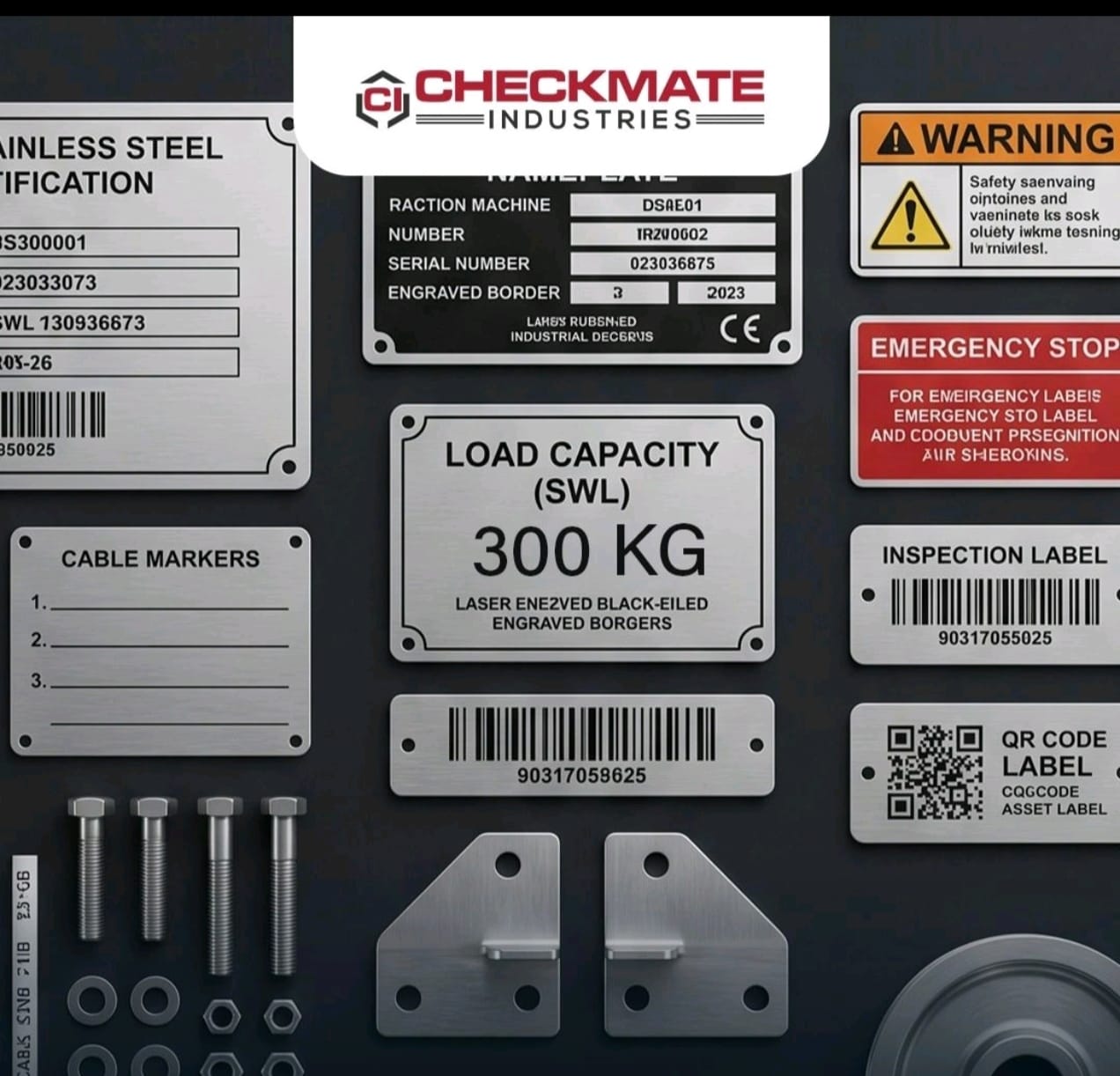
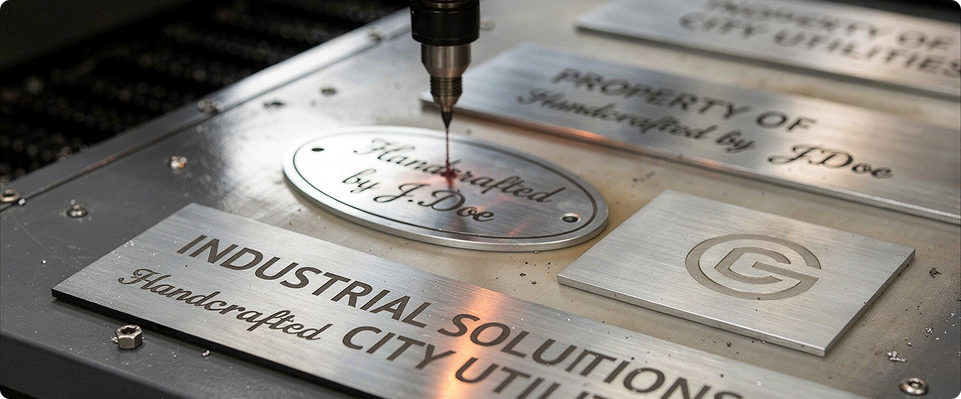
  • Laser engraving cuts directly into the metal surface, producing crisp, permanent text and barcodes that won’t wear off, ideal for serial numbers, asset IDs, and QR codes that need to stay scannable for the life of the equipment.
  • Embossing raises the lettering above the surface, which is useful for tags that need to be read or felt in low-light conditions, and is a common choice for lightweight aluminum tags produced in bulk.
  • Chemical etching uses acid to mark the metal, offering a cost-effective option for detailed designs, logos, or fine text on stainless steel plates.

Common Applications

  • Asset tracking – linking physical equipment to inventory systems via unique IDs or barcodes.
  • Equipment and machinery ID –  labelling model numbers, capacities, or operating instructions directly on machinery.
  • Compliance and serial plates – meeting regulatory requirements for traceability, inspection dates, or certification numbers.
  • Safety signage – durable warning or instructional tags in high-risk industrial areas.

How to Choose the Right Tag for Your Application

Before ordering, it helps to work through three questions: What environment will the tag be exposed to (indoor, outdoor, chemical, marine)? How long does it need to last  a few years, or the lifetime of the equipment? And how will it be attached, riveted, adhesive-backed, bolted, or wired on? Answering these narrows the choice of material, marking method, and mounting option quickly, and avoids paying for a durability level the application doesn’t actually need.

Frequently Asked Questions

How long do industrial metal tags typically last?

Laser-marked 316 stainless steel tags are generally rated for outdoor and industrial use for 10–20 years or more, since the marking is engraved into the metal rather than printed on top. Aluminum tags in moderate conditions typically last 5–10 years, while lifespan in harsher settings depends on exposure to chemicals, salt, or extreme temperature swings.

What’s the difference between engraved and embossed metal tags?

Engraved tags have text or graphics cut into the metal surface, usually with a laser, giving a flat, highly durable finish that resists wear from handling. Embossed tags have raised lettering pressed into the metal, which can be easier to read or feel in low-light or high-vibration environments, and is often a faster, lower-cost process for large batch runs.